
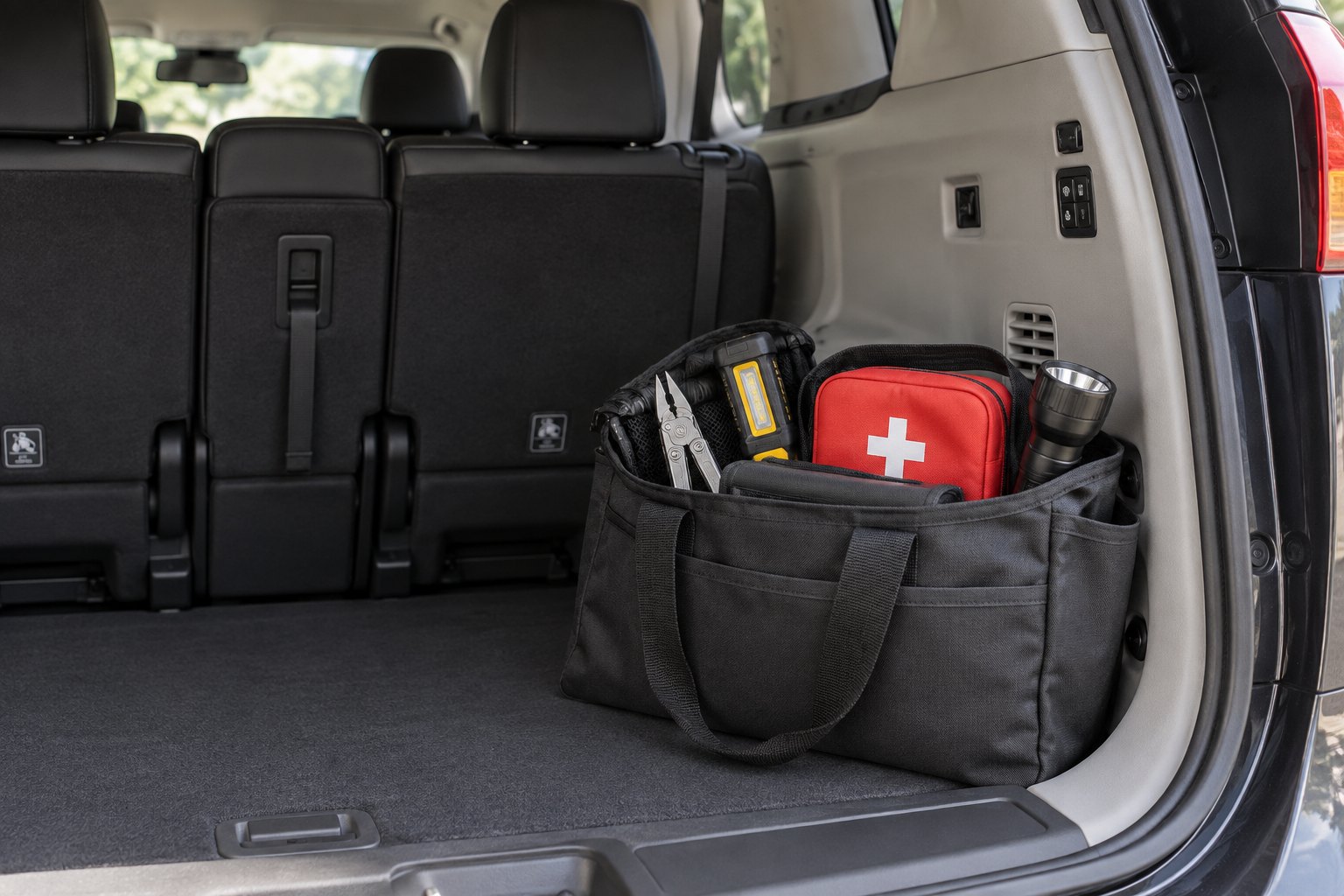
When you rely on an adaptive vehicle, being prepared for an unexpected delay or roadside problem matters even more. A flat tire, dead battery, bad weather, or equipment issue can turn a routine trip into a stressful situation, especially when you depend on your vehicle for safe and accessible transportation.
That’s where a well-packed emergency travel kit can make a real difference. You don’t need to fill your vehicle with every possible tool or supply. Instead, you can keep a practical collection of essentials that helps you stay safe, communicate with others, and manage common problems until help arrives.
In this blog, you’ll learn what to include in your emergency travel kit, where to store it, and how to keep it ready.
Why Adaptive Vehicles Require a Specialized Emergency Kit
A standard roadside emergency kit is designed for problems that can happen to almost any vehicle: a dead battery, flat tire, poor visibility, or a vehicle that has stopped running. Those supplies still matter, but an adaptive vehicle can present a few additional challenges that are easy to overlook.
Think about what happens if your power-operated ramp or lift stops working. If you’re away from home, you may not be able to simply leave the vehicle and deal with the problem later. Depending on your setup, a power failure could affect how you enter or exit the vehicle. The same may apply to powered doors, transfer seats, or other accessibility equipment. That’s why it’s important to know the emergency or manual procedures for your specific equipment and keep any manufacturer-recommended instructions or tools accessible.
Your wheelchair or mobility device also deserves consideration. A damaged tire, loose component, or depleted battery can create a problem that a typical roadside kit cannot solve. Depending on what you use, you may want to carry a basic repair kit, tire inflator, spare charging cable, or backup power source.
Personal essentials matter, too. If you’re waiting for roadside assistance, water, necessary medication, a charged phone, a portable power bank, and weather-appropriate clothing can help you stay comfortable and connected.
The goal isn’t to prepare for every possible emergency. Build your kit around your vehicle, mobility equipment, and travel routine, so you have practical options when a routine trip takes an unexpected turn.
Category 1: Vehicle & Conversion Emergency Tools
Start your emergency kit with the equipment that helps you keep your adaptive vehicle usable when something goes wrong. Because your vehicle may have ramps, lifts, or other mobility equipment that a standard car doesn’t, a few specialized tools can be especially useful.
Keep Manual Override Tools Accessible
If your powered ramp or lift loses power, you may need to operate it manually. Depending on your equipment, this could mean using a manual ramp crank, hand-pump, or another manufacturer-provided override mechanism. Keep these tools within reach rather than buried beneath luggage or other supplies.
It’s also worth knowing how the manual system works before you actually need it. A few minutes spent reviewing the procedure can save you considerable roadside frustration.
Consider a Power Drill and Socket
For some adaptive ramps and lifts, a compatible power drill with the correct socket can make manual deployment or retraction much quicker. However, use this approach only if the equipment manufacturer or mobility installer specifically allows it. The right socket and procedure will depend on your particular system, so check your equipment documentation before adding this tool to your kit.
Carry Spare Fuses and Jumper Cables
Adaptive equipment often relies on your vehicle’s electrical system. A blown fuse or weak battery can affect auxiliary mobility equipment even when the vehicle itself appears relatively functional. Keep the correct spare fuses for your vehicle and conversion equipment, along with a reliable set of jumper cables or another appropriate jump-start solution.
Prepare for a Flat Tire
Tire problems can be more complicated when your vehicle has been modified for accessibility, particularly if equipment affects where the spare tire is stored or how easily you can reach it. A portable tire inflator and tire-repair kit can give you another option for a minor puncture or low tire while you arrange professional assistance.
Category 2: Wheelchair & Mobility Equipment Supplies
Your vehicle may be capable of getting you home, but that doesn’t help if your wheelchair or mobility equipment develops a problem along the way. A few compact supplies can help you handle small issues yourself and keep an inconvenient moment from becoming a much bigger one.
Keep a Few Basic Tools Handy
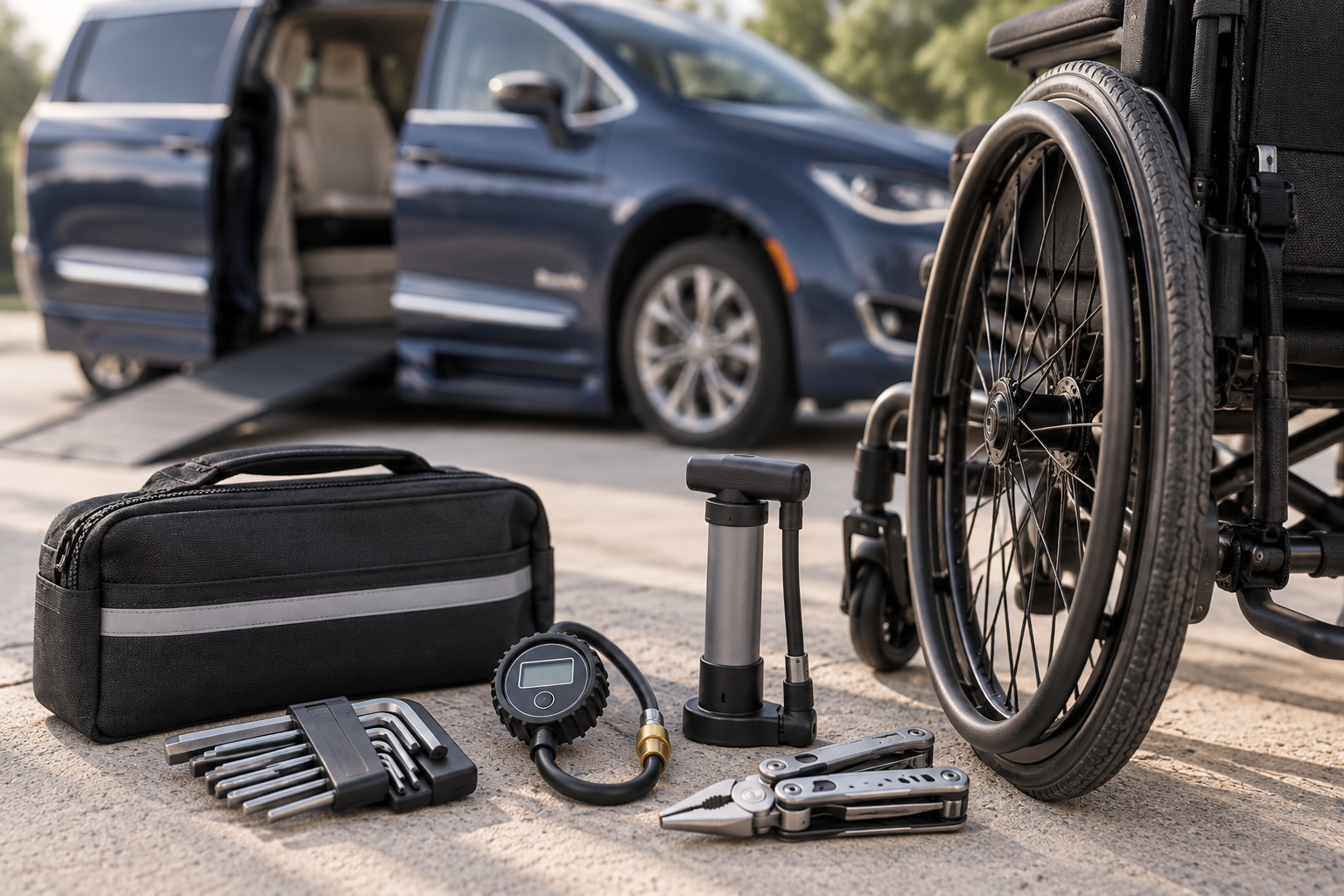
A small Allen wrench set and multi-tool can help you tighten a loose footrest, armrest, joystick mount, or another component. You don’t need a full toolbox. Check your equipment beforehand so you carry the sizes you’re actually likely to use.
Prepare for a Wheelchair Tire Problem
If your wheelchair uses pneumatic tires, a manual air pump and tire-patch kit can be valuable additions. A slow leak or minor puncture can happen at an inconvenient time, and having a way to add air or temporarily repair the tire can help you get through the situation.
If you use a power chair or another battery-powered device, think about charging needs as well. A compatible backup charger can help you maintain mobility when you’re away from your usual charging setup. A power bank can also keep your phone running, which matters when you need to contact family, roadside assistance, or your mobility equipment provider.
Consider an Emergency Transfer Board
An emergency transfer board can provide another option if you unexpectedly need to leave your vehicle and your usual transfer method isn’t available. Only use one if you already know how to transfer safely. If someone regularly assists you, make sure they’re familiar with it too.
Like What you're reading? Subscribe to our Newsletter and get new updates directly to your inbox
Category 3: Personal Safety & Medical Backups
A roadside delay can be uncomfortable for anyone, but when you rely on medication, mobility equipment, or assistance from others, being prepared can make the situation much easier to manage. Your personal emergency supplies should cover more than injuries. Think about what you would need to stay safe, comfortable, and connected if you have to wait longer than expected for assistance.
Keep Essential Medication Available
If you take daily prescription medication, consider keeping an emergency supply with your travel kit. Having three to five days of essential medication can be helpful if a breakdown, severe weather, or another unexpected delay keeps you away from home. Store medication according to its requirements, particularly if it needs temperature control, and check expiration dates regularly.
You can also include a basic first-aid kit with items such as adhesive bandages, gauze, antiseptic wipes, and disposable gloves. Your kit doesn’t need to replace professional medical care. It simply gives you supplies for handling minor issues while you arrange appropriate help.
Make Emergency Tools Easy to Reach
A seatbelt cutter and window breaker are only useful if you can reach them quickly. Keep them secured within easy reach from your usual driving or wheelchair position, rather than in a trunk or compartment that could become inaccessible after a crash. Choose tools designed for vehicle emergencies and learn how they work beforehand.
Prepare for Michigan Weather
Michigan weather can change quickly, and a roadside delay can expose you to conditions you weren’t expecting. Pack thermal blankets, hand warmers, and season-appropriate rain ponchos. In colder months, consider adding extra layers, gloves, and other cold-weather essentials.
Pack Food and Water You Can Actually Use
Keep non-perishable snacks and water in your vehicle. Choose foods that are easy to open and eat, particularly if hand strength or dexterity is limited. Easy-open packaging can make a difference when you’re tired, stressed, or waiting for assistance.
Step-by-Step: Storing & Maintaining Your Emergency Kit
Putting together an emergency kit is only half the job. You also need to know where it is and make sure everything inside is still useful when you need it.
1. Choose a Reachable Location
Consider what would happen if your vehicle lost power or your ramp couldn’t deploy. Could you reach your emergency supplies from your usual wheelchair or driver position? Keep essential tools and safety equipment accessible without relying on the powered ramp, lift, or another system that may be affected.
2. Check Your Kit With the Seasons
Twice a year, check battery and power-bank charges, replace expired food and medications as appropriate, inspect tire-repair supplies, and update seasonal clothing. Before winter, add items such as blankets, hand warmers, and gloves. When warmer weather arrives, adjust the kit and make sure nothing has been damaged or misplaced.
3. Keep Important Information on Paper
Keep physical copies of important medical information, including relevant medications, allergies, and emergency contacts. Also keep contact information for your mobility equipment provider, vehicle conversion company, insurance provider, and 24/7 roadside assistance service. If your phone dies, you’ll still have the numbers available.
Travel with Total Confidence with Clock Mobility
An emergency kit can’t prevent every problem on the road, but it can help you feel more prepared when something unexpected happens. When you know where your supplies are, understand how your adaptive equipment works, and have the right contacts close by, a roadside delay doesn’t have to completely derail your plans.
You can take that preparation one step further by making sure your vehicle and conversion equipment are ready before a long trip. At Clock Mobility, you can have your adaptive vehicle checked for routine maintenance, equipment concerns, and safety issues before you set out. A quick inspection can give you greater peace of mind and help you catch potential problems before they become roadside emergencies.
Before your next long drive, visit Clock Mobility to schedule a comprehensive maintenance check or safety inspection. A little preparation today can help you travel with greater confidence tomorrow. Contact us now!
OTHER ARTICLES YOU MIGHT BE INTERESTED IN