
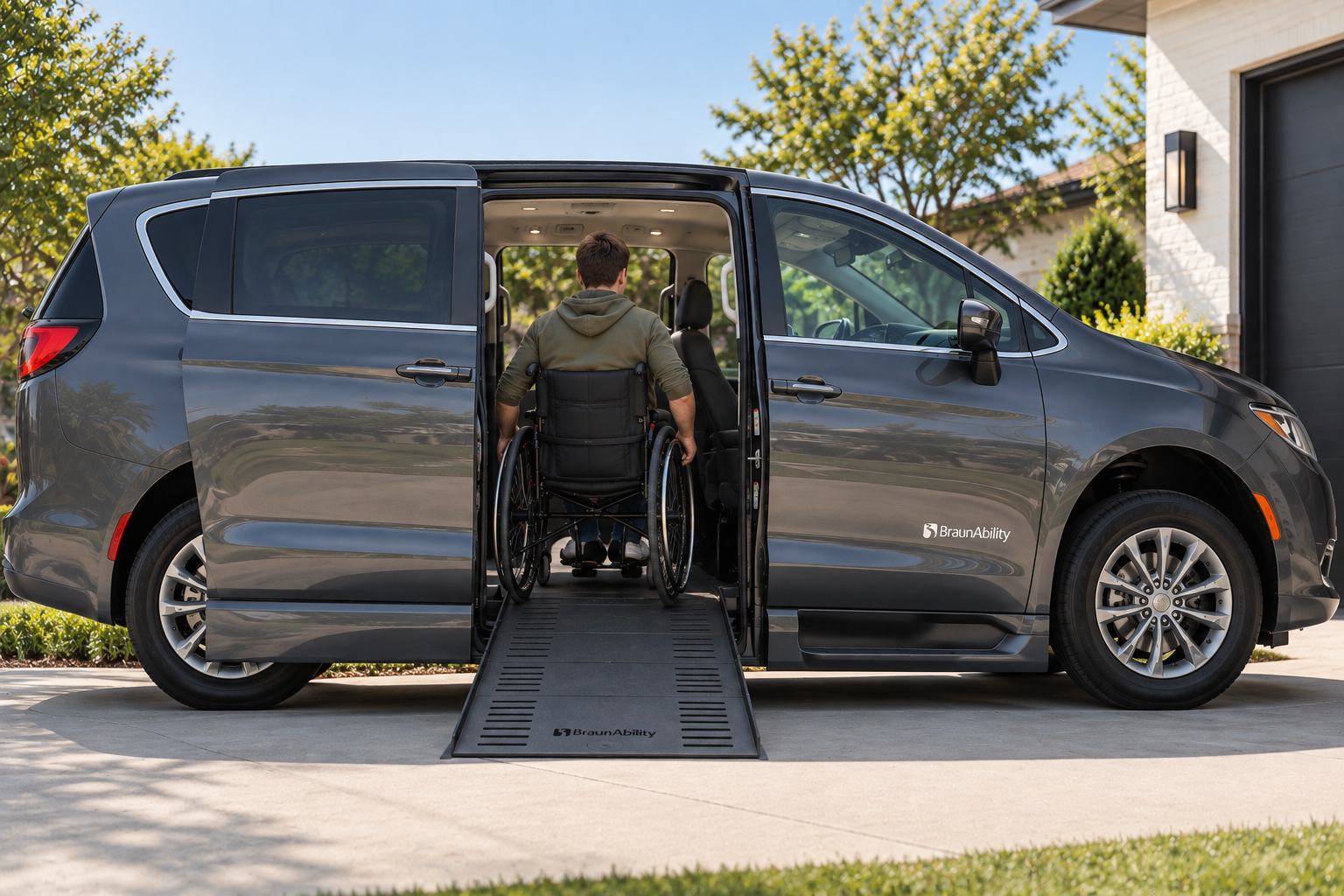
If you’re a taller wheelchair user, traveling in a minivan can come with challenges that aren’t always obvious at first. You may have enough room to get inside, but still find yourself adjusting your posture, watching your head, or working around limited space once you’re seated. A lowered-floor minivan approaches the problem differently by creating more usable space inside the vehicle.
For taller passengers, that can mean more room to sit upright, easier entry and exit, and a more comfortable ride. Understanding how these conversions create that extra space can help you determine what to look for when choosing an accessible minivan.
The Hidden Challenges Taller Wheelchair Passengers Face on the Road
When you’re taller and use a wheelchair, the challenge isn’t always getting through the door. Sometimes, the real problem begins once you’re inside the vehicle. A standard minivan may leave you with less usable headroom than you need, making it difficult to sit upright comfortably. You may have to slouch slightly, tilt your head, or adjust your position just to avoid brushing against the headliner. Over a short trip, that may be manageable. On a longer drive, it can become tiring.
Your view of the road can also be affected. Instead of having a clear line of sight through the windows, you may find yourself looking at door frames, pillars, or other parts of the vehicle. That can make the cabin feel more restrictive and reduce the visibility you want when you’re traveling.
Then there’s the doorway itself. If the available clearance is tight, you may need to pay close attention to where your head, shoulders, and wheelchair are positioned while entering or exiting. A small misjudgment can mean bumping against the door frame or having to maneuver more carefully than you should.
How BraunAbility Lowered Floor Conversions Create Extra Space
A lowered floor conversion does more than make it possible to bring a wheelchair into a minivan. It also changes the usable space you have once you’re inside. During a BraunAbility conversion, the original vehicle floor is lowered and reinforced, while the interior is reconfigured around wheelchair access. In a side-entry vehicle, much of the cabin floor is lowered, giving you more vertical space between your wheelchair seat and the roof.
That extra space can matter even more when you sit taller in your wheelchair. You’re not constantly thinking about where your head is in relation to the ceiling or trying to find a comfortable position that gives you enough room. BraunAbility’s XT, or Extra Tall, conversions are specifically designed for people who need additional doorway and interior height. For example, current Chrysler Pacifica and Voyager XT models offer a 57-inch doorway opening and 60 inches of interior height at the center and driver/passenger positions.
The goal isn’t simply to make the van technically accessible. It’s to give you enough room to sit naturally and move through the cabin with fewer physical restrictions.
How much headroom does a taller wheelchair user need in a minivan?
No single measurement works for everyone. Your seated height, wheelchair dimensions, posture, and where you sit inside the vehicle all matter. The right conversion should give you enough clearance to sit comfortably without slouching or constantly worrying about your head hitting the roof. BraunAbility recommends considering your wheelchair height when choosing between standard-height and XT options.
Key Benefits of a Lowered Floor Minivan for Taller Passengers
1. Natural Sitting Posture & Maximum Headroom
When the roof is too close to your head, you may find yourself bending your neck, tilting your head, or slouching without even realizing it. Over time, those positions can make a comfortable journey feel unnecessarily tiring.
A lowered floor gives you more vertical space between your wheelchair and the roof. BraunAbility’s XT conversions are designed for taller seated heights and can provide up to 60 inches of interior center height, depending on the vehicle. That additional room can help you maintain a more natural, upright position instead of adapting your posture to the cabin.
2. Effortless Entry Through Extra-Tall Doorways
Getting through the side door shouldn’t require you to duck your head or tilt your wheelchair just to clear the opening. With limited doorway height, you may have to make several small adjustments while entering, particularly if you sit high in your wheelchair.
BraunAbility XT models are designed with extra-tall door openings, with up to 56 inches of usable doorway height depending on the conversion. That can give you more clearance as you move through the doorway and into the cabin, making entry and exit feel more straightforward.
3. Eye-Level Window Sightlines & Social Connection
Where you sit inside the vehicle affects more than your comfort. It also affects what you can see and how connected you feel to the people around you.
With adequate interior space, you can maintain a more natural line of sight through the windshield and side windows rather than having your view blocked by door frames or other parts of the cabin. You can also interact more easily with the driver and other passengers without constantly repositioning yourself to see or be seen.
4. Optimized Seatbelt & Securement Geometry
Seating height also matters for positioning your seatbelt and wheelchair securement system. When everything is at the right height and angle, the lap and shoulder portions of the belt can sit where they’re intended, while the wheelchair tie-downs can work with the seating position rather than around it.
A properly configured accessible vehicle helps reduce awkward belt angles and unnecessary pulling across your shoulders. Always install and use your wheelchair securement and occupant restraint system according to the vehicle and equipment manufacturer’s instructions, matching the setup to your specific wheelchair and seating position.
Like What you're reading? Subscribe to our Newsletter and get new updates directly to your inbox

BraunAbility Engineering: Purpose-Built Solutions for Taller Users
When you’re choosing an accessible minivan, headroom is only part of the experience. You also want the vehicle to feel comfortable once you’re inside and make everyday travel easier from the moment you approach the ramp. BraunAbility incorporates several features designed to improve that experience.
Quiet Drive™ Technology
A quieter cabin can make a surprising difference when you spend a lot of time on the road. BraunAbility’s Quiet Drive™ technology reduces acoustic noise inside the vehicle, creating a calmer environment for conversations, music, or simply enjoying a peaceful drive. Less road and conversation-related noise can also make longer journeys feel more comfortable.
Step and Roll Removable Seating
Your wheelchair doesn’t necessarily have to determine where you sit throughout the journey. BraunAbility’s Step and Roll removable seating gives you flexibility in how you use the vehicle. Depending on the configuration, you can ride in the front passenger position or, with the appropriate setup, position yourself behind the steering wheel.
That flexibility can be useful when you want to drive, travel as a front passenger, or accommodate different passengers using the minivan.
Power Auto-Kneel & Ultra-Wide Ramps
The transition from the ground into the vehicle can feel much easier when the ramp isn’t excessively steep. BraunAbility’s Power Auto-Kneel system lowers the rear of the vehicle when the ramp is deployed, helping reduce the ramp incline for a smoother transition into the cabin.
The ultra-wide ramp also gives you more room to maneuver your wheelchair as you approach and enter the vehicle. Instead of carefully navigating a narrow path, you have a wider entry point that can make getting in and out feel more straightforward. For taller wheelchair users, these details complement the additional headroom by making the entire entry process feel less restrictive.
Finding the Right Fit: Why Measurement Matters
When you’re choosing a wheelchair-accessible minivan, numbers like doorway height and interior headroom can give you a useful starting point. But the right fit ultimately depends on you and your wheelchair. A measurement that works well for one passenger may not give you enough room to sit comfortably.
Your seated height is one of the most important factors. If you sit higher in your wheelchair, you need enough space between your seat and the vehicle roof to remain upright without bending or tilting your head. Your chair base also matters because the height of the wheelchair, cushion, and other components affects your overall seated position.
Eye level is another consideration. Ideally, you should be able to look through the windshield and side windows naturally rather than having your view blocked by door frames or other parts of the cabin. The right floor drop can help create enough vertical space to support both comfortable posture and a clear line of sight.
This is where a local mobility specialist can add real value. Instead of choosing a conversion based only on general vehicle specifications, you can have your seated height, wheelchair dimensions, and preferred seating position measured before deciding. A specialist can then help determine whether a standard-height or extra-tall conversion suits your setup.
Ready for a Better Road Experience?
When you’re a taller wheelchair passenger, having enough space inside your minivan isn’t a small detail. It can affect how comfortably you sit, how easily you enter and exit, how clearly you see your surroundings, and how relaxed you feel throughout the journey.
A lowered-floor minivan gives you more room to work with, but finding the right conversion means looking beyond a single measurement. Your seated height, wheelchair setup, eye level, and preferred seating position all matter. At Clock Mobility, we can help you consider those details and find an accessible vehicle that fits your needs, rather than asking you to adapt to the vehicle.
If you’re considering a lowered-floor or extra-tall conversion, talk with our mobility specialists about your measurements, wheelchair setup, and travel needs. We can help you explore the available options and find a configuration that gives you the space to sit naturally, enter comfortably, and travel with greater ease.
Your vehicle should work for you. Contact Clock Mobility today to get started!
OTHER ARTICLES YOU MIGHT BE INTERESTED IN