

Health insurance has always been complicated, but it can be especially overwhelming for people with disabilities who rely on specialized equipment just to get through the day.
Since adaptive vehicle conversions are among the most expensive accessibility investments, costing $20,000 to $45,000, most insurers have historically treated them as lifestyle purchases rather than medical necessities.
However, this may no longer be the reality. According to the recent regulatory guidance and expanded waiver activity, both Medicare and Medicaid may now recognize certain vehicle modifications as legitimate medical expenses and, in some cases, cover a significant portion of the costs. Here’s what that may mean for you.
Medicare Part B: Understanding the “Medically Necessary” Shift
Medicare is divided into different parts, each covering a specific category of care. For wheelchair users, Part B is the most relevant, as it covers Durable Medical Equipment (DME) such as wheelchairs, walkers, and hospital beds when a doctor prescribes them as medically necessary.
Now, Medicare interprets “medically necessary” in the context of mobility and vehicle modifications. If adaptive equipment is prescribed by a Medicare-accepted physician for medical reasons and used exclusively by the beneficiary, it may now qualify for DME classification under Part B.
What May Be Covered Under Medicare Part B
Not every modification falls under this umbrella, but two categories have the strongest case for coverage:
- Hand controls and steering aids: Various equipment, such as hand controls, steering aids, tri-pins, palm grips, and other driving adaptive devices, may qualify as DME if a person has paraplegia or limited grip strength or upper-body mobility that affects their ability to drive.
- Essential securement systems: Wheelchair lifts, tie-down systems, and transfer seats can run anywhere from $10,000 to $35,000, but they directly reduce the risk of injury while traveling. If a physician prescribes these systems as medically necessary and a Certified Driver Rehabilitation Specialist supports that recommendation, Medicare is more likely to recognize them.
Medicare 80/20 Coverage Rule
Medicare Part B coverage generally follows the standard 80/20 cost-sharing structure. It states that Medicare pays 80% of the approved amount after your Part B deductible (projected at $283for 2026), while the beneficiary is responsible for the remaining 20%.
For example, if a hand control system costs $2000, Medicare pays $1,600, leaving you with $400 out of pocket. It’s not a full solution, but it can make a meaningful difference for expensive modifications.
Like What you're reading? Subscribe to our Newsletter and get new updates directly to your inbox
Like What you're reading? Subscribe to our Newsletter and get new updates directly to your inbox
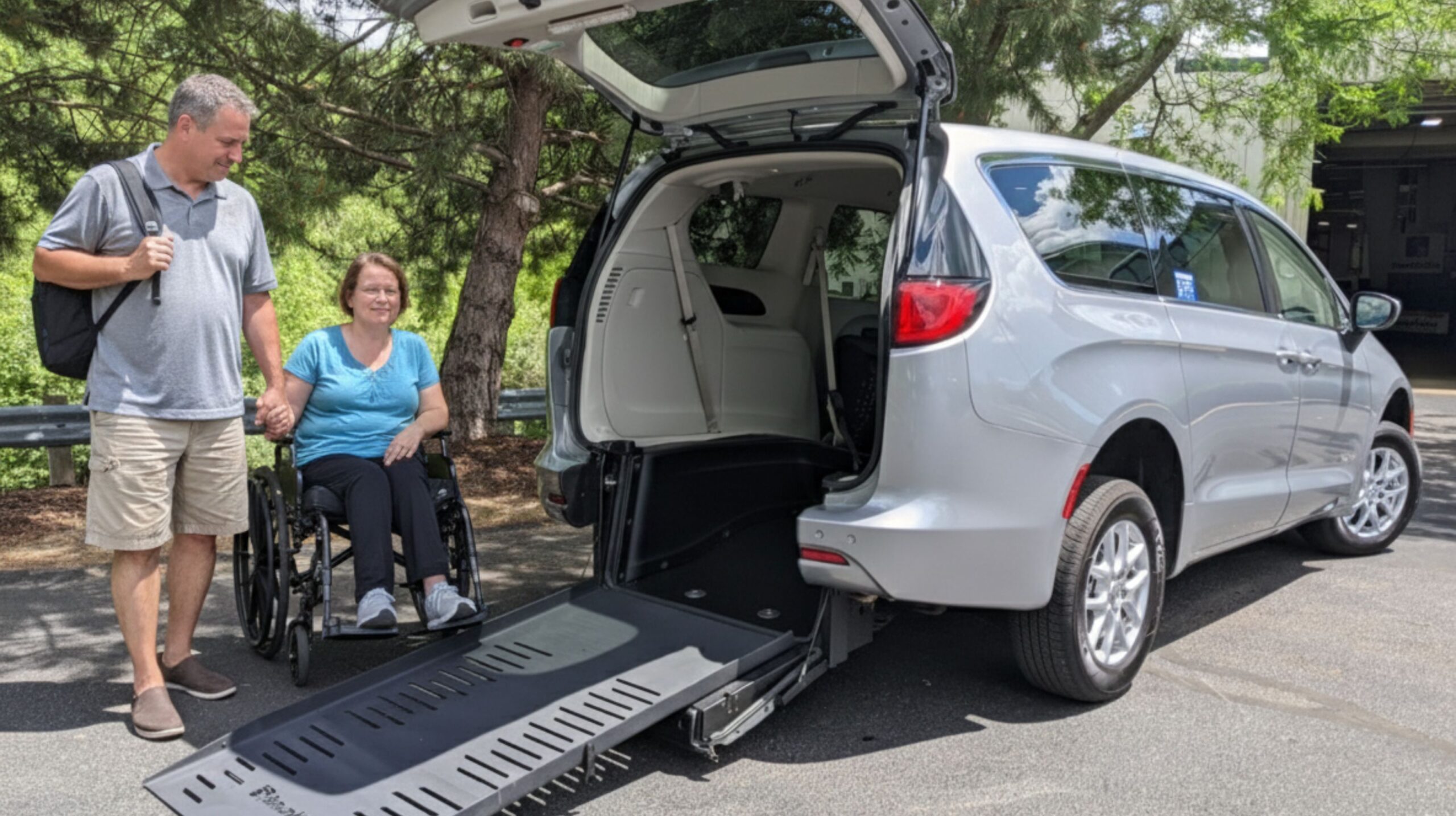
Medicaid Waivers: Michigan’s Path to Vehicle Modifications
While Medicare only covers adaptive equipment, Medicaid’s Home and Community-Based Services (HCBS) Waivers go further.
As such, Michigan has emerged as one of the more progressive states in applying these waivers, with vehicle modifications explicitly listed as a covered service under multiple programs. This includes the MI Choice Waiver, Children’s Waiver, MI Coordinated Health HCBS Waiver, and the Habilitation Supports Waiver.
Under these programs, eligible individuals may be able to access funding for automated ramp installations, accessibility adaptations to an existing vehicle, or vehicle repair and maintenance that would otherwise fall outside standard Medicaid coverage.
Medicare’s 3-Step “Prescription for Freedom”
Medicare coverage requires documentation, professional involvement, and working with suppliers who understand the billing process.
- Get a Doctor’s Prescription: Coverage almost always starts with a physician’s written statement confirming the modification is medically required for your independence or safety. The prescription should reference the patient’s diagnosis, functional limitations, and reasons for that particular modification.
- Work with a Certified Driver Rehabilitation Specialist (CDRS): A CDRS evaluates your physical abilities and recommends the exact adaptive equipment that fits your needs. Their assessment is often required by Medicare and Medicaid before any coverage is authorized.
- Partner with Clock Mobility: Once you have your prescription and CDRS evaluation, bring it to Clock Mobility. We work with Medicare-accepted suppliers and handle the billing correctly from the start, reducing the chance of claim denials.
Bridging the Gap: What Insurance Still Won’t Cover
Unfortunately, Medicare coverage Part B does not cover the actual car itself or any major chassis alterations. This means you still have to pay anywhere from $35,000 to $85,000 to purchase an accessible van. That’s a substantial amount for anyone, even when the conversion itself may be covered.
The good news, you can always take advantage of Clock Mobility’s Rental program and BraunAbility Leasing (starting at $649/month). The leasing option handles the vehicle, while insurance or waiver funding covers the conversion, ultimately splitting the cost across two separate funding streams, if eligible.
Let Clock Mobility Check Your Eligibility
If you need assistance handling Medicare coverage, Medicaid waivers, or leasing options for handicap vans, contact a Clock Mobility Specialist today for a free insurance and funding consultation. We’ll review your situation, walk through the required documentation, and share different programs that may be available in 2026 and beyond.
OTHER ARTICLES YOU MIGHT BE INTERESTED IN