
Is Your Teen Outgrowing Their Pediatric Wheelchair Van Layout? Signs It’s Time to Upgrade
As your child enters their teenage years, growth can happen faster than you expect. A pediatric wheelchair van layout that once felt comfortable may suddenly seem too small, making everyday travel more challenging. If your teen has to duck their head while entering the van or slouch in their wheelchair to fit, it’s more than an inconvenience. These adjustments can affect posture, reduce comfort, and even compromise safety during every trip.
Recognizing these changes early can help you create a safer and more supportive travel experience. In this guide, you’ll learn the key physical signs that your current van layout no longer fits your teen’s needs and explore practical floor and door extension solutions designed to provide greater comfort, accessibility, and long-term usability.
Recognizing the Signs: When Your Current Van Layout Falls Short
As your teen grows, their wheelchair van should continue to support their comfort, safety, and independence. However, physical growth and changing mobility needs can gradually make a pediatric van layout feel restrictive. If everyday loading and travel require constant adjustments, your van may no longer be meeting your family’s needs. Here are some of the most common signs that it’s time to consider an upgraded layout.
Doorway Clearance Restrictions
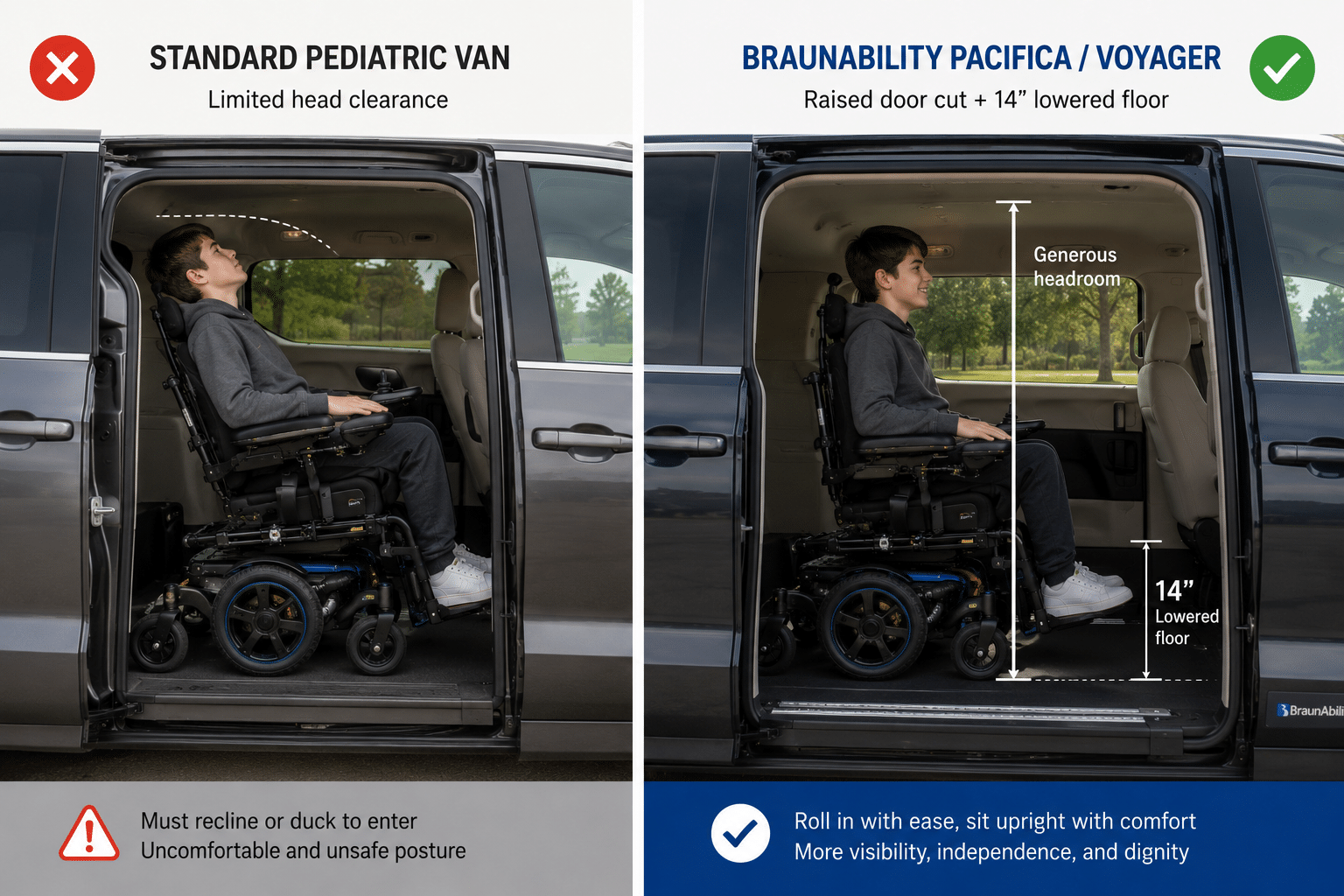
One of the earliest signs is limited doorway clearance. If your teen has to duck their head, lean to one side, or recline their power wheelchair just to pass through the doorway, the entry space has become too restrictive. Repeating these adjustments can lead to poor posture, discomfort, and an increased risk of bumping their head or scraping the wheelchair. Your teen should be able to enter and leave the vehicle in a natural, upright position without contorting their body.
Knee and Legroom Interference
A teenage growth spurt often brings longer legs, which means the seating position that once felt comfortable may no longer provide enough space. You might notice your teen’s knees pressing against the back of the front seats, dashboard structures, or mid-row console mounts. This can force them into awkward sitting positions for the entire ride. Limited legroom can affect comfort and posture, especially during longer trips. If your teen frequently shifts position or complains about feeling cramped, inadequate legroom could be the reason.
Increased Equipment Weight and Footprint
As your teen’s mobility needs evolve, their wheelchair often changes as well. Many families transition from lightweight pediatric manual chairs to larger adult power wheelchairs, including models like the Permobil M or F series. These chairs offer advanced seating functions, greater stability, and improved independence, but they also require more interior space. Their wider bases, taller seating systems, and larger turning radius can make maneuvering inside a van more challenging. If loading the wheelchair feels like a tight squeeze or positioning it correctly takes multiple attempts, your current layout may no longer have enough room for the equipment your teen depends on.
Caregiver Physical Strain
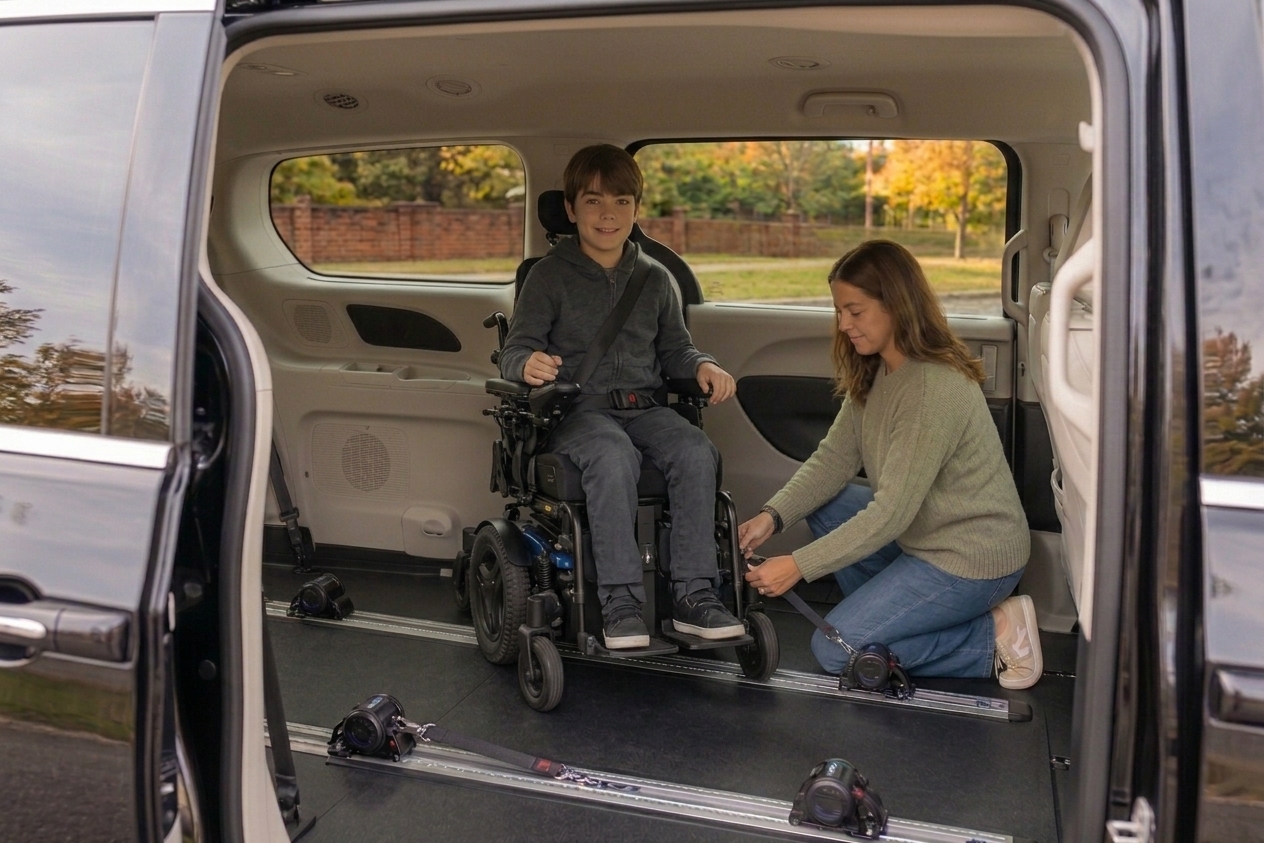
Your comfort matters too. As interior space becomes more limited, everyday tasks like attaching four-point tie-down straps or operating manual wheelchair locks can become increasingly difficult. You may have to bend, stretch, kneel, or twist into awkward positions just to secure the wheelchair safely. Over time, these repeated movements can strain your back, shoulders, and knees. An upgraded van layout can create more working space, making it easier and safer to secure the wheelchair while reducing the physical demands on you as the caregiver.
Like What you're reading? Subscribe to our Newsletter and get new updates directly to your inbox
Technical Solutions: Lowered Floors and Raised Doors
Once you recognize that your teen has outgrown the current layout, you may not need to replace the entire vehicle. Depending on their wheelchair, seating height, and daily needs, a mobility conversion specialist may be able to modify the van to create more usable space. Solutions such as deeper floor lowering, raised door openings, and heavy-duty ramps can make a significant difference in how comfortably your teen enters, exits, and rides in the vehicle.
Floor-Lowering Conversions
If your teen’s head is getting too close to the van’s ceiling, lowering the floor can give you the vertical space you are missing. Floor-lowering conversions can provide approximately 10 to 14 inches of additional floor drop, creating more usable interior height without requiring your teen to constantly adjust their seating position.
That extra space can be especially valuable when your teen uses a taller power wheelchair or an elevated seating system. Instead of ducking their head or traveling with their chair reclined simply to fit inside the vehicle, they can maintain a more natural, upright position. You also gain more room above the wheelchair, making loading and unloading feel less restrictive.
Raised Door Cut Extensions
Sometimes the floor isn’t the only limitation. If the doorway itself is too low, lowering the floor may not completely solve the problem. A raised door cut extension can address this by extending the upper portion of the doorway and adjusting the surrounding door seals to create a taller entrance.
Depending on the conversion, this type of modification can provide 56 inches or more of vertical entrance clearance. That added height can give your teen the space they need to enter without leaning forward, ducking, or lowering their seating position. It can also make loading easier for you when guiding a taller power chair through the doorway.
Heavy-Duty Ramp Systems
Your ramp also needs to keep up when your teen’s wheelchair becomes larger and heavier. A lightweight pediatric chair may have been easy to load with the original ramp, but an adult power chair can significantly increase the total weight you need to manage. A heavy-duty ramp rated for 800 pounds or more can provide the additional capacity needed for larger power chairs and the person using them.
Depending on the ramp design and manufacturer rating, higher-capacity systems can also provide more flexibility when a caregiver or driver needs to assist during loading. The goal isn’t simply to make the van bigger. It’s to make sure every part of the entry and loading process works together so your teen can travel comfortably and you can handle the routine with less stress.
Beyond Capacity: Independence and Front-Row Seating Options
As your teenager grows, upgrading your van isn’t only about creating more physical space. Their mobility needs, preferences, and sense of independence are changing too. A layout that worked when you were simply focused on getting them safely from one place to another may no longer feel right. At this stage, you can start thinking about where your teen sits, what they can see, and how the vehicle can support greater independence.
Mid-Row vs. Front-Passenger Placement
For many wheelchair users, the mid-row area is the practical choice because it provides plenty of room for a wheelchair and makes loading straightforward. But as your teen gets older, they may want to feel more involved in the travel experience rather than separated from everyone else.
Moving your teen into the front-passenger position can give them a better view of the road and allow them to participate more naturally in conversations with you and other passengers. Instead of feeling tucked away in the middle of the van, they can see what’s happening around them and feel more connected to the people they’re traveling with.
Your teen may simply appreciate being able to sit up front, chat with you, choose the music, or enjoy the same view as everyone else. The right placement can make the van feel less like a transportation space and more like a normal part of everyday life.
OTHER ARTICLES YOU MIGHT BE INTERESTED IN