When you picture a modern classroom, you probably picture more than a desk and chair. Whiteboards, lab benches, group tables, classroom materials, and plenty of activities happen at different heights. For a student who uses a traditional power wheelchair, something as simple as reaching a whiteboard or joining classmates around a lab bench can become an everyday obstacle. You may find yourself looking up at conversations or asking someone else to reach something you could otherwise handle yourself.
The Permobil F5 Corpus VS changes that experience by bringing power standing into your everyday mobility. Instead of transferring to another device, you can transition from sitting to standing and adjust your position to better match what’s happening around you.
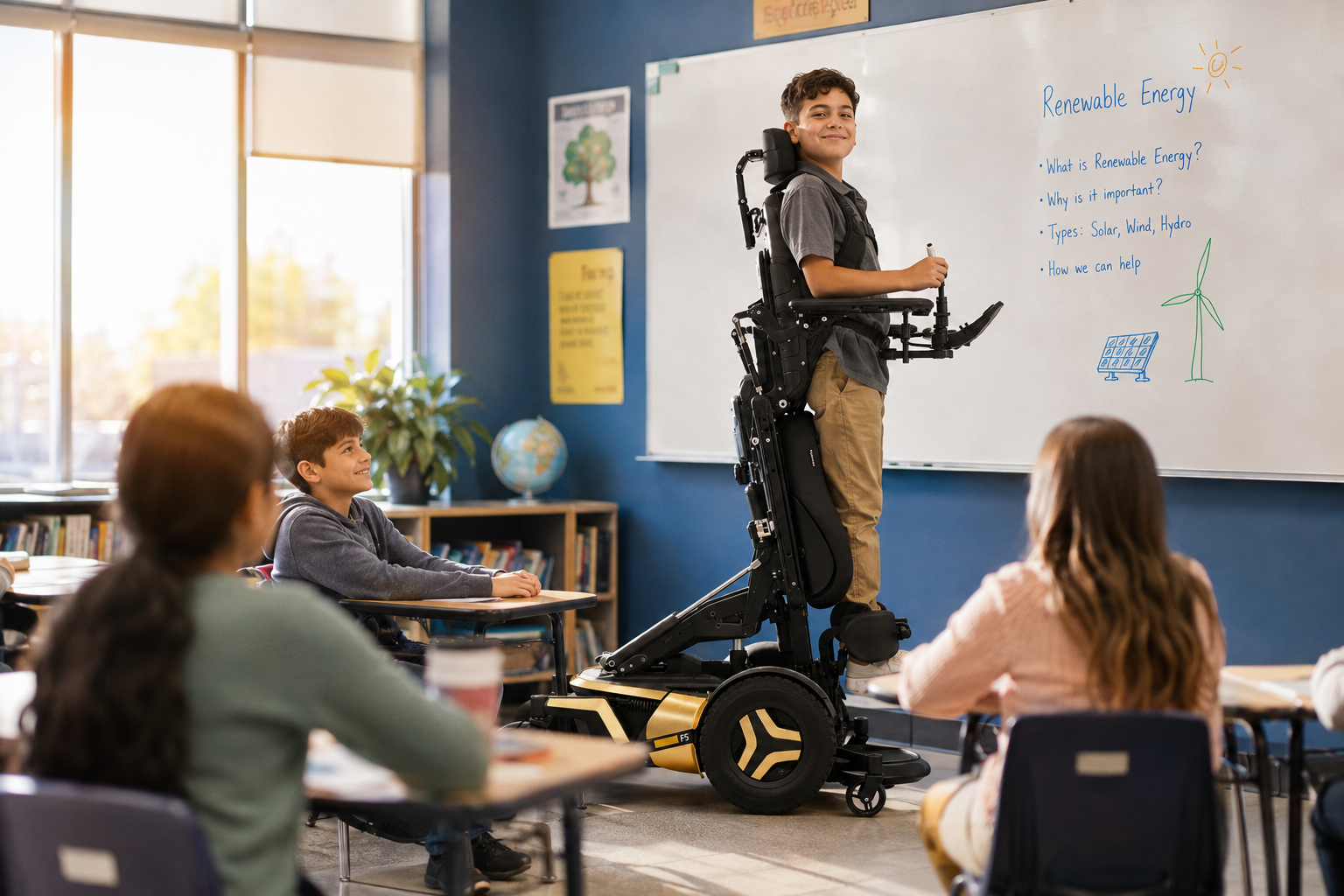
Classroom Inclusion: Eye-Level Engagement and Board Accessibility
Whiteboards, Lab Benches, and Learning Spaces
A classroom isn’t designed around one height. Whiteboards are often mounted well above seated eye level, science labs use standard-height counters, and library shelves can put materials beyond easy reach. When your wheelchair keeps you at one fixed height, these details can turn ordinary schoolwork into something that requires assistance.
With the Power Standing feature on the Permobil F5 Corpus VS, you can raise yourself into a standing position without transferring out of your chair. That can make it easier to write on a whiteboard, work at a lab bench, or reach classroom materials. Instead of watching someone else handle part of an activity for you, you can be right there doing it yourself.
Group Work and Eye-Level Connections
Then there’s the social side of school.
Group projects, classroom discussions, and presentations are all about interacting with the people around you. When everyone else is standing or sitting at a similar height, and you’re positioned significantly lower, conversations can feel different. You may have to look up to make eye contact, while your classmates naturally look down toward you.
Standing can change that dynamic. You can meet classmates and teachers at eye level, making conversations feel more natural and allowing you to take part in group activities without that physical separation. It’s a small change in position that can make a surprisingly meaningful difference in how you experience the classroom.
Greater Independence During Lessons
You also don’t have to wait for a teacher or aide every time the classroom setup changes. If you need to adjust your height to see a demonstration, reach a material, or reposition yourself for an activity, Permobil’s standing function gives you that option.
That doesn’t mean you will never need assistance. It simply means you have more control over the situations you can handle yourself, while your teacher and aide can spend more of their attention on teaching and supporting your education.
Clinical Impact: How In-Class Standing Supports Physical Health
Supporting Bone and Joint Health
Your school day can involve several hours in your wheelchair, so changing positions can be an important part of your overall mobility routine. For students who are clinically appropriate for standing, regular weight-bearing may support bone health, positioning, and other physical goals as they grow.
The F5 Corpus VS lets you incorporate standing without leaving your wheelchair. Your physical therapist, physician, or other clinical professional can determine whether standing is appropriate for you and how it should fit into your individual care plan.
Breathing, Digestion, and Circulation
Changing your position during a long school day can also give your body a break from remaining seated. An upright posture may support breathing and make it easier to project your voice when you’re answering questions or giving a presentation. Changing positions can also encourage movement and circulation when you’re typically seated for much of the day.
These benefits will look different from student to student, which is why your clinical team should guide how and when you use the standing function. The goal isn’t simply to stand because you can. It’s to use standing as part of a mobility routine that makes sense for your body and your daily needs.
Managing Pressure While Staying in Class
Pressure management is another consideration when you’re seated for extended periods. Moving between sitting and standing changes where pressure is placed on your body and can be incorporated into a broader pressure-relief routine when recommended by your clinical team.
The practical advantage at school is that you don’t necessarily have to leave class every time you need a position change. You can adjust your position while staying part of the lesson, rather than choosing between meeting your physical needs and keeping up with what’s happening in the classroom.
Like What you're reading? Subscribe to our Newsletter and get new updates directly to your inbox
Dynamic Mobility: Safe Transit and Repositioning in Busy Hallways
Drive-in-Standing Capabilities
The school day doesn’t pause when you leave the classroom. You still have to get through crowded hallways, enter doorways, move between buildings, and get to your next class.
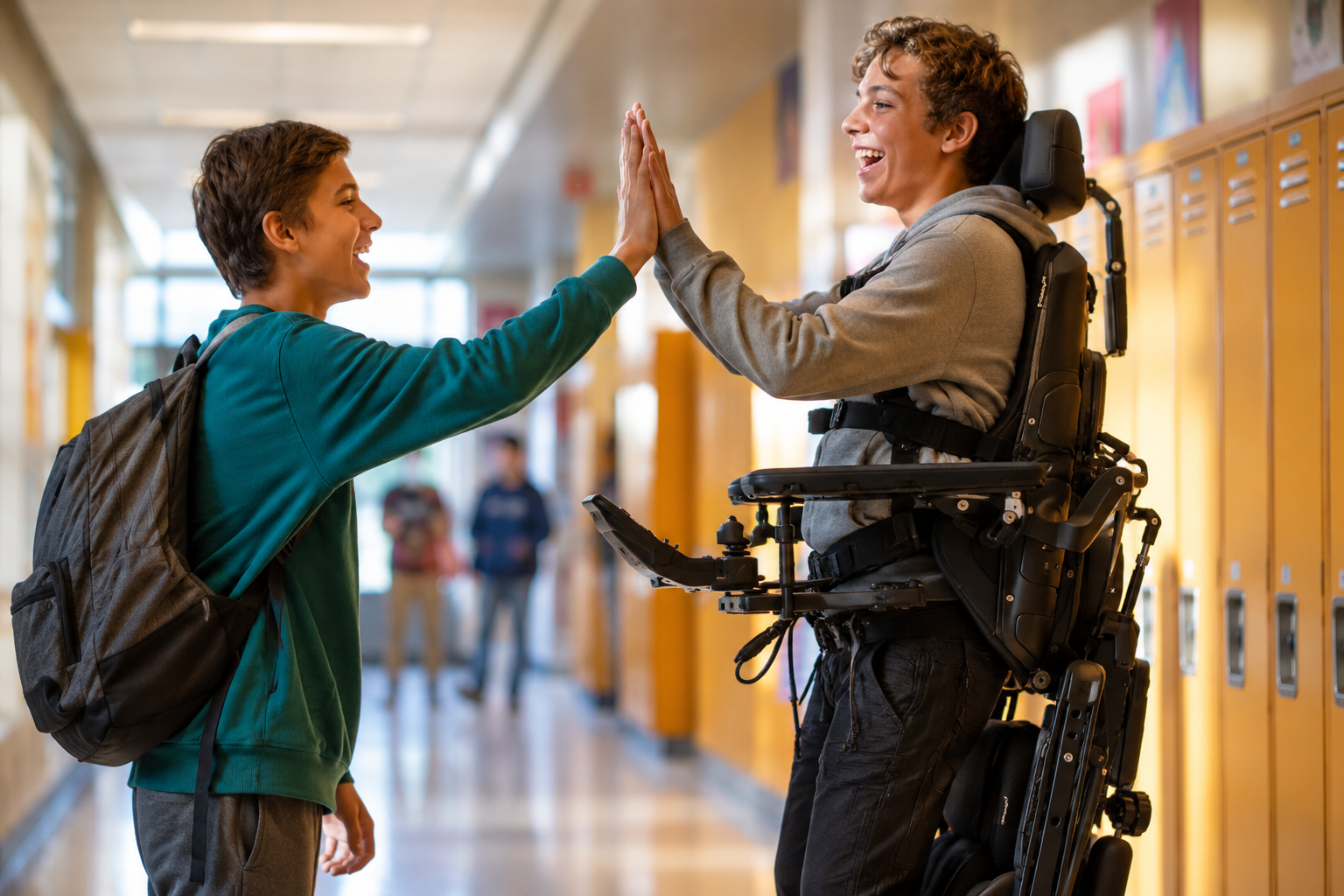
The F5 Corpus VS lets you drive while elevated, with speed reducing as you move into standing positions. That can be useful when you want to remain upright while moving through the school rather than sitting back down every time you need to travel.
In a busy hallway, slower movement can also give you more time to navigate around classmates, corners, doorways, and other obstacles. Your exact driving capabilities and settings should always be determined with your clinical and seating team.
Smooth Center-of-Gravity Transitions
Schools aren’t always perfectly smooth environments. You may encounter door thresholds, ramps, uneven surfaces, or transitions between indoor and outdoor areas.
The F5 Corpus VS combines its standing system with support features designed to help maintain your position as you change posture. Chest and knee supports help provide stability as you transition to standing, while the chair’s suspension is designed to help manage movement across different surfaces.
That can matter when you’re heading outside for physical education, traveling to another building, or simply moving between classes. Standing and mobility don’t have to be completely separate parts of your day. With the right clinical setup, they can work together as you move through your school environment.
Advocating for Your Student: IEPs, Insurance, and Clinical Support
Choosing a power wheelchair with standing capabilities isn’t just about adding another feature to a chair. You want to be able to explain why that feature matters in your student’s actual school day.
When you meet with an IEP or 504 team, bring the conversation back to specific situations. Does your student need to reach a whiteboard? Participate at a lab bench? Interact with classmates at eye level? Change positions without leaving instruction? Those examples can help the team understand how the equipment supports participation.
Clinical documentation can strengthen that conversation. A physician, physical therapist, or other qualified professional can explain the student’s positioning, mobility, and standing needs and how the recommended equipment addresses them.
Funding can be another hurdle. If you’re in Michigan, Clock Mobility can help you navigate potential coverage pathways, including Workers’ Compensation, Auto No-Fault, and complex rehab claims for students recovering from catastrophic injuries. We can help you understand the process and work alongside your clinical team as you gather the documentation needed to pursue appropriate equipment.
Empowering Students with Clock Mobility
The right mobility equipment can affect much more than how you get from one classroom to another. It can influence how you participate, communicate, learn, and move through your school day.
– Eye-level learning: Reach whiteboards, engage with classmates, and take part in activities at a more natural height.
– Physical health: Incorporate clinically recommended standing and position changes into your daily routine.
– Independence: Handle more classroom activities and adjustments without automatically waiting for someone else.
At Clock Mobility, we understand that choosing complex rehab equipment is a personal decision. That’s why we’d rather help you experience the F5 Corpus VS than expect you to decide from a brochure. If you’re a parent, therapist, or member of a school team, schedule an in-person evaluation with our Assistive Technology Professionals (ATPs). Together, we’ll look at your student’s needs, daily environment, and goals to determine whether the F5 Corpus VS is the right fit. Contact us now!
OTHER ARTICLES YOU MIGHT BE INTERESTED IN