
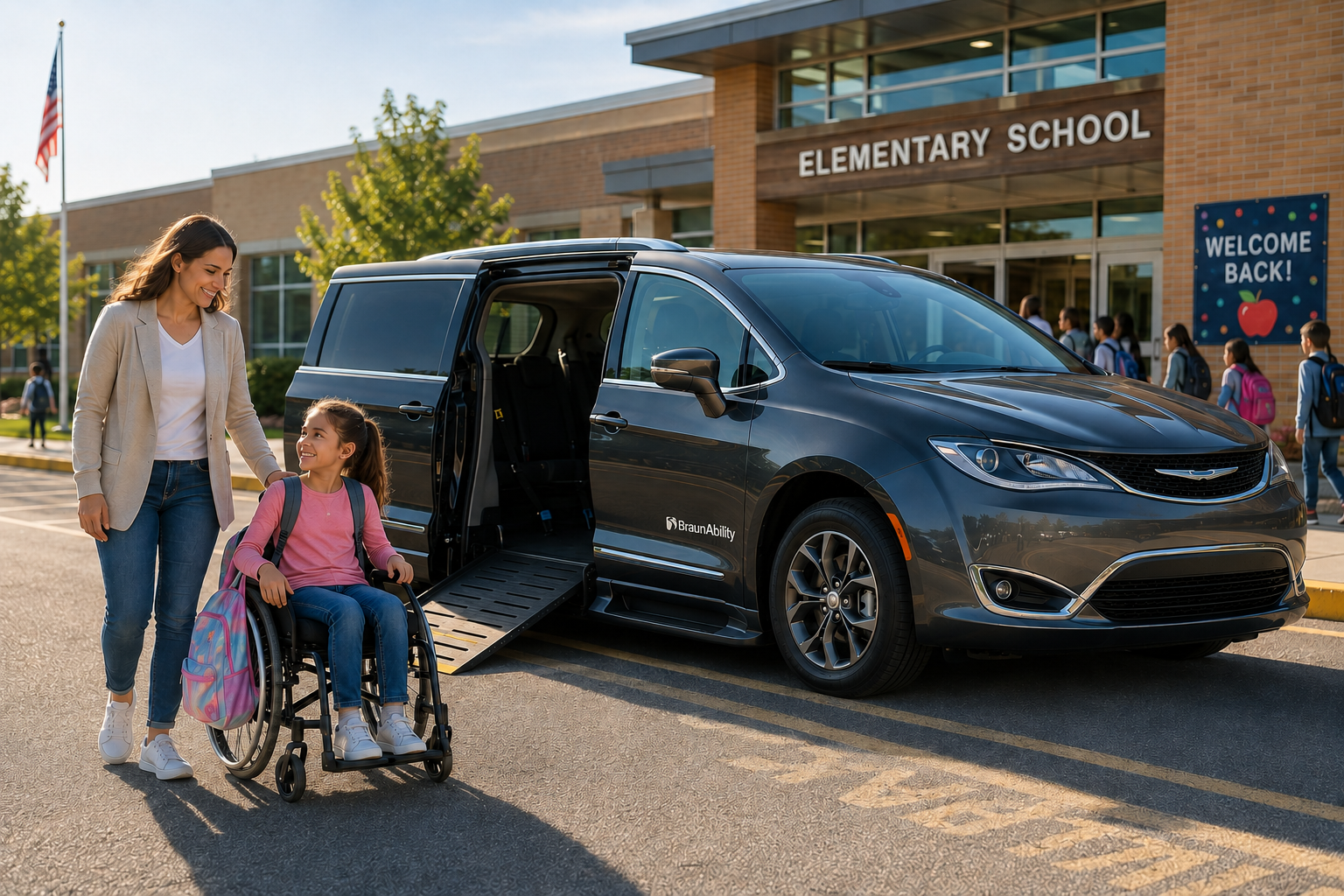
As summer winds down, your daily driving routine shifts from flexible schedules to busy, time-sensitive school mornings. Every trip matters, and even a small delay can throw off the entire day. A sticky wheelchair ramp hinge, a slow lift, or a frayed tie-down strap might seem minor until you’re waiting in the school drop-off line with only minutes to spare.
Taking time to prepare your accessible van before the school year begins helps you avoid unnecessary stress while keeping every ride safe and reliable. With a little seasonal maintenance, you can protect your passenger’s independence, improve your vehicle’s performance, and keep your back-to-school routine smooth, predictable, and ready for the demands of every school day.
Hardware First: Servicing Ramps, Lifts, and Kneeling Systems
Test Your Ramp and Lift Operation
Your ramp or lift is one of the hardest-working parts of your accessible van, especially during the school year when every morning follows a tight schedule. Before classes begin, test it several times to make sure it deploys and retracts smoothly without hesitation. If you notice jerky movement or hear grinding, squealing, or straining noises from the motor, don’t ignore them.
Small issues often become bigger problems when the equipment is used every day. While you’re at it, clean the ramp door tracks and remove any dirt, leaves, gravel, or other debris that may have built up over the summer. Keeping these areas clear helps the ramp move freely and reduces unnecessary wear.
Check Your Kneeling System
If your van has a kneeling system, make sure it lowers and raises consistently each time you use it. A reliable kneeling system creates a safer, more comfortable boarding experience by reducing the angle between the curb and the vehicle. Pay attention to how quickly the system responds and whether the van lowers evenly. Slow operation or uneven movement may point to worn actuators or issues with the air or hydraulic lines. Identifying these concerns before the school routine begins can help you avoid unexpected delays and keep daily trips running smoothly.
Verify the Manual Backup System
Even the most dependable accessibility equipment can be affected by a dead battery, a blown fuse, or an unexpected electrical problem. That’s why it’s worth taking a few minutes to locate and test the manual override crank or release mechanism before the first day of school.
Familiarize yourself with how it works so you won’t have to figure it out under pressure in a crowded drop-off line. Knowing you have a reliable backup gives you confidence that, even if the unexpected happens, you can continue your journey safely and with as little disruption as possible.
Safety & Securement: Inspecting Tie-Downs and Restraints
Inspect Your Securement System
A reliable wheelchair securement system is something you rarely think about until it doesn’t work as expected. During the school year, when every morning follows a tight schedule, even a small issue can create unnecessary stress. Before the first day of school, take a few minutes to inspect your tie-downs and restraints so you can feel confident that everything is ready for daily use.
Whether your accessible van uses a Q’Straint, EZ Lock, or another securement system, carefully examine each component. Run your hands along the webbing and look for signs of fraying, cuts, or thinning that may have developed through regular use. Test the retractors to make sure they extend and retract smoothly, then confirm that the locking mechanism engages securely every time. As you inspect the system, check for cracked housings, damaged mounting points, or worn parts that could affect performance. Replacing a worn component before it fails is always easier than dealing with an unexpected problem during a busy school drop-off.
Make Every Ride Secure
Once the wheelchair is properly secured, make sure the occupant restraint system is doing its job. The lap belt should fit low across the pelvic bones, while the shoulder belt should rest comfortably across the chest and shoulder. Avoid placing the belt across an armrest or allowing it to sit against the neck, as improper positioning can reduce its effectiveness during sudden stops or collisions. Taking an extra moment to adjust the belts correctly helps provide the protection they were designed to offer.
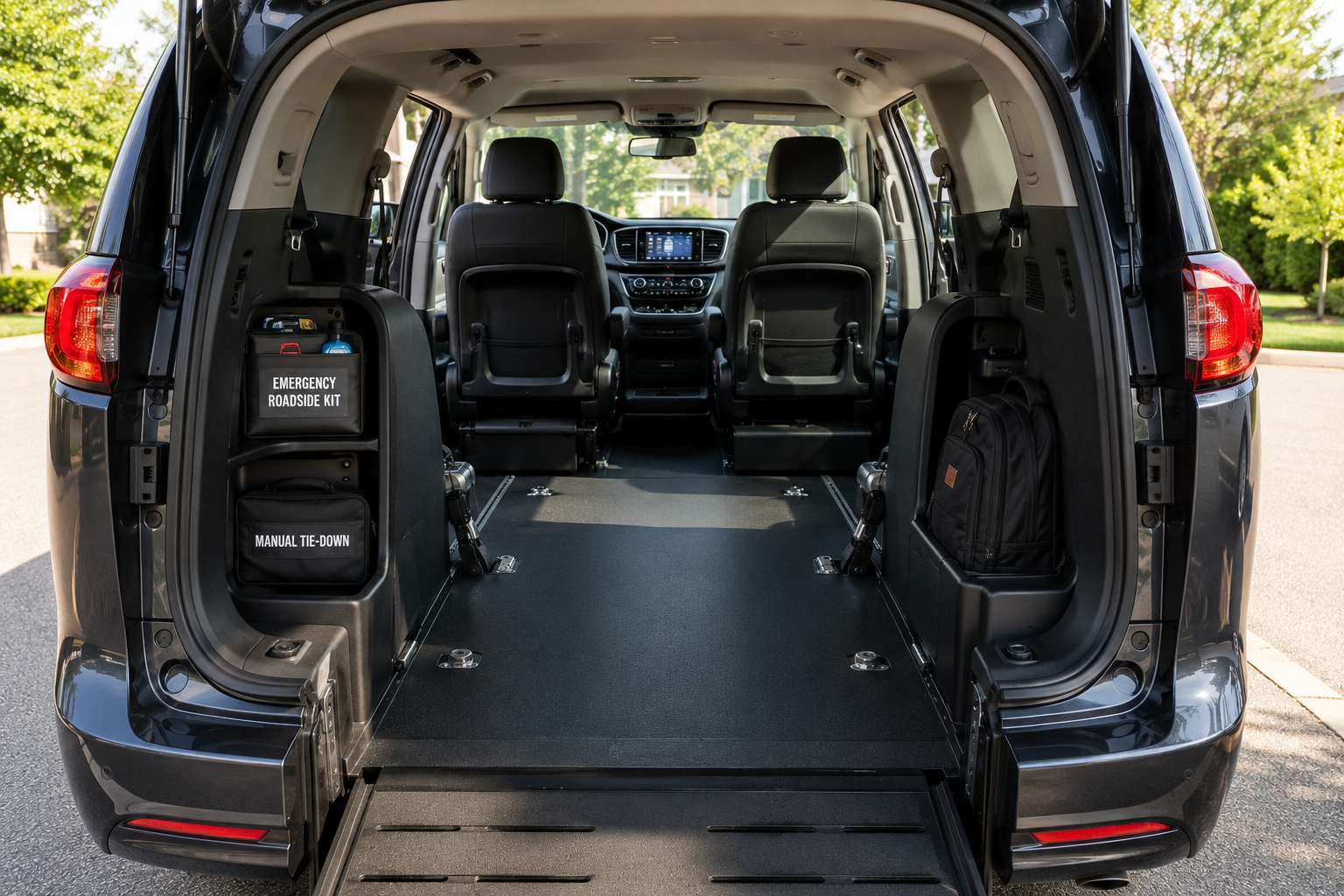
It’s also a smart idea to keep a spare set of manual tie-down straps in your cargo area. While you may never need them, they can be invaluable if a primary strap becomes damaged or a retractor stops working unexpectedly. They also give you added flexibility when transporting a different wheelchair or helping another family during a school event or carpool. A little preparation today can make school mornings feel much more predictable, giving you one less thing to worry about when every minute counts.
Like What you're reading? Subscribe to our Newsletter and get new updates directly to your inbox
General Chassis Readiness: Tires, Batteries, and HVAC
When the school year begins, your accessible van becomes part of a carefully planned routine. It isn’t just getting you from one place to another—it helps you stay on schedule, supports your family’s independence, and makes everyday travel more manageable. That’s why it’s worth taking a little time to make sure the vehicle itself is ready for the demands of daily school runs.
Start with your tires, especially if you drive a lowered-floor accessible minivan. Because these vehicles have a modified suspension, their tires can wear differently than those on a standard minivan. Take a close look at the tread and watch for uneven wear that could affect handling or traction. It’s also a good idea to check the tire pressure before the school routine picks up. Properly inflated tires help the van handle more predictably, especially when you’re carrying a wheelchair, heavy backpacks, or other mobility equipment. They can also improve braking performance and reduce unnecessary wear over time.
Next, consider the demands your accessible van places on its battery and electrical system. Unlike a standard vehicle, yours may power a ramp, lift, kneeling system, and climate controls, all of which draw energy every time you use them. After months of high summer temperatures, batteries are often under more strain than they appear. If you’ve noticed slower engine starts, dimming lights, or accessibility equipment that seems less responsive, don’t wait for the first hectic school morning to investigate. Having the battery and charging system checked now can help you avoid an inconvenient surprise later.
Finally, think about comfort before anyone even gets into the van. If your vehicle has a remote start feature, use it to cool the cabin on warm mornings or warm it up as the weather cools down. A comfortable interior makes loading easier and creates a smoother transition for everyone, especially if your passenger is sensitive to temperature changes. Sometimes, the smallest preparations make the biggest difference in helping your school mornings start calmly and stay on track.
Carpool Efficiency: Organization and Loading Strategies
Build a Routine That Works for Everyone
A well-organized accessible van can make busy school mornings feel much less hectic. When everything has its place, loading takes less time, distractions are reduced, and everyone knows what to expect before the vehicle even starts moving.
Begin by creating dedicated storage areas for the items you carry every day. Secure heavy backpacks, medical supplies, sports equipment, and other essentials so they stay in place throughout the trip. Loose items can shift while you’re driving, block the wheelchair’s turning radius, or slide beneath footrests, making it more difficult to load and unload safely. A few simple storage organizers or cargo straps can help keep the cabin clear and make important items easier to reach when you need them.
As you think about your daily routine, pay attention to where you stop for school drop-offs and pick-ups. Whenever possible, deploy your ramp or lift onto an elevated sidewalk instead of an active traffic lane. This provides a more stable boarding surface and helps reduce exposure to passing vehicles. Taking a moment to position your van carefully before unloading can make the experience safer for everyone, especially during the busiest parts of the morning when traffic and pedestrians are constantly moving around you.
Before the first day of school arrives, consider doing a practice run with your child. Load the wheelchair, secure the restraints, organize school bags, and follow the same routine you expect to use during the school year. A trial run gives both of you the chance to become familiar with the process without the pressure of a crowded school entrance or a ticking clock. It can also help you spot small adjustments that make loading quicker and more comfortable. By the time the first school morning arrives, you’ll already have a routine that feels familiar, efficient, and far less stressful.
Partnering with Your Local Mobility Service Team
Getting your accessible van ready for the school year doesn’t have to be complicated. A little preparation now can help you avoid unexpected delays and keep your daily routine running smoothly. Before the first day of school, make sure you’ve checked these essentials:
– Test your ramp, lift, and kneeling system for smooth, reliable operation.
– Inspect wheelchair tie-downs, seatbelts, and securement equipment for signs of wear or damage.
– Check your tires, battery, and electrical system to ensure they’re ready for daily use.
– Organize backpacks, medical supplies, and mobility equipment so they stay secure during every trip.
– Do a practice loading and unloading routine to make school mornings feel familiar and stress-free.
Even with regular at-home checks, nothing replaces the confidence that comes from a professional inspection. At Clock Mobility, we know your accessible van is more than just transportation—it’s an essential part of your family’s daily life.
Our factory-certified technicians can identify small issues before they become costly repairs, helping you stay safe, reliable, and ready for every school day. With the right preparation and a trusted mobility service team by your side, you can focus less on your vehicle and more on what truly matters: getting your family where they need to go with confidence and peace of mind. Contact us now!
OTHER ARTICLES YOU MIGHT BE INTERESTED IN