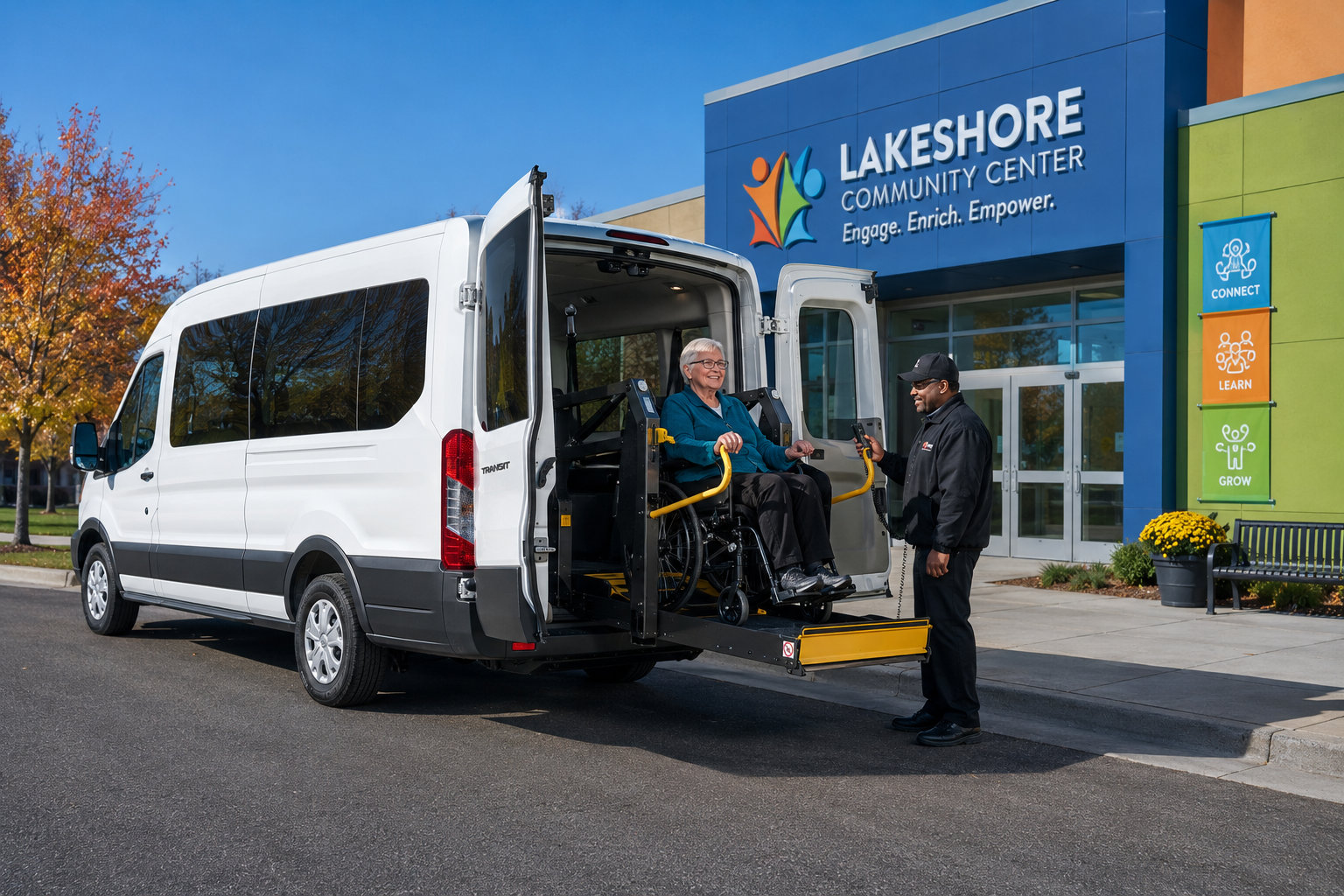
Whether you transport seniors to medical appointments, help individuals with disabilities reach community programs, or provide shuttle services for local events, the right vehicle can make a meaningful difference in how you serve your community. A commercial transit upfit is the process of converting a factory cargo van or standard passenger van into a fully accessible, ADA-compliant transit vehicle designed to safely accommodate wheelchair users and other passengers.
For Michigan non-profits, this isn’t just about adding accessibility features; it’s about creating a reliable, flexible vehicle that adapts to changing transportation needs while helping reduce liability and improve passenger safety. With a professionally upfitted transit van, your organization can maximize every trip and protect an investment that continues serving your community for years to come.
The Core Foundation: Commercial Lowered Floors and Modular Tracking
Why Standard Factory Interiors Fall Short
If you’re operating a non-profit transit program, a standard factory van can quickly become limiting. Most factory interiors are built for personal transportation, not for the daily demands of community transit. Limited headroom can make boarding uncomfortable for taller passengers and caregivers, while smooth vinyl flooring becomes slippery when it’s wet from rain, snow, or melted ice. Fixed seating layouts create another challenge, leaving you with little flexibility when your passenger count or accessibility needs change from one trip to the next. Over time, these limitations can affect efficiency, passenger comfort, and overall safety.
Modular Floor Systems That Adapt to Your Mission
A commercial upfit solves these challenges by replacing the standard interior with a modular floor system, such as SmartFloor or L-Track aluminum tracking. Instead of permanently fixed seats, these systems allow you to add, remove, or reposition seating in just a few minutes. That flexibility is especially valuable for non-profits, where transportation needs often vary throughout the day. You can configure the van for additional wheelchair positions in the morning, then rearrange the layout for a larger passenger group later in the day without investing in multiple vehicles.
Heavy-Duty Flooring Built for Michigan Conditions
Commercial transit vans also use non-skid, marine-grade flooring that’s designed to handle years of heavy use. Unlike standard flooring, it withstands muddy shoes, wheelchair caster traffic, mobility equipment, and the constant wear of transporting passengers every day. It’s also built to withstand Michigan’s harsh winters, where snow, slush, and road salt can quickly damage lower-quality materials. The textured surface improves traction for passengers, caregivers, and drivers, creating a safer boarding experience while helping your vehicle maintain a professional appearance for years to come.
Lifts vs. Ramps: Choosing the Right Boarding Mechanism for Your Passengers
The right boarding solution depends on the people you serve every day. While both wheelchair lifts and ramps improve accessibility, they aren’t designed for the same type of operation. Choosing the right option helps you provide a safer, smoother experience for passengers while making daily transportation easier for your drivers and volunteers.
Commercial Hydraulic Lifts for High-Demand Transit
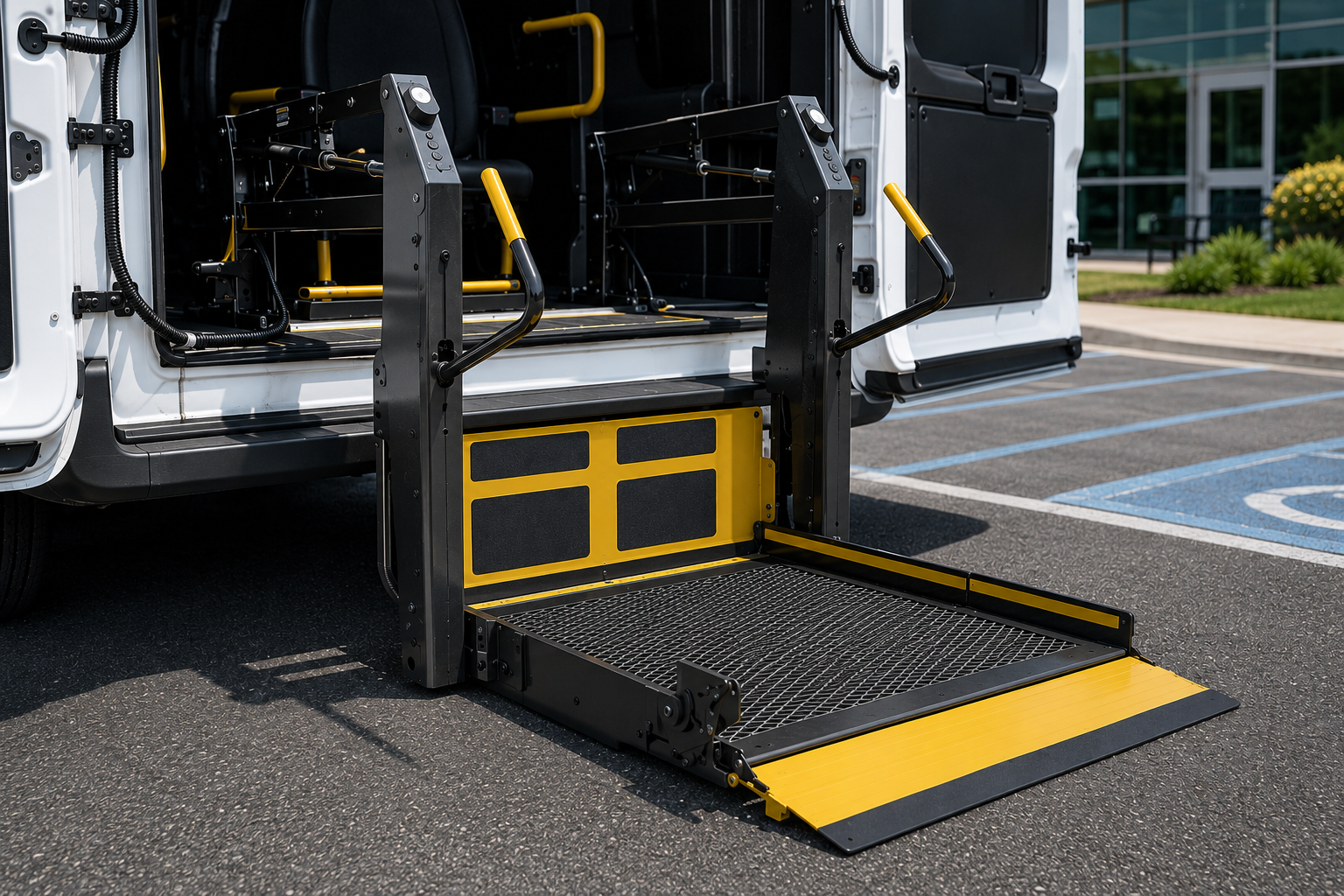
If your organization regularly transports passengers who use power wheelchairs or heavier mobility devices, a commercial hydraulic lift is often the better choice. Heavy-duty systems, such as the BraunAbility Century and Millennium series, are designed for frequent daily use and can safely handle larger wheelchairs with minimal physical effort from the driver. Available in under-vehicle and rear-mounted configurations, these lifts provide a stable platform that raises and lowers passengers smoothly. For non-profits with busy transportation schedules, they also help reduce loading times and minimize strain on staff, making them well suited for high-volume community transit services.
Manual and Power Folding Ramps for Lighter-Duty Service
Ramps are an excellent option when you’re operating a lowered-floor conversion van that primarily serves passengers using manual wheelchairs, walkers, or other lightweight mobility aids. Available in both manual and power-folding designs, side- and rear-entry ramps provide quick, convenient access while requiring fewer moving components than hydraulic lifts. They also work well when boarding locations have enough space to safely deploy the ramp. For organizations with lower daily passenger volumes or shorter transportation routes, ramps can offer a practical and efficient accessibility solution.
Match the Equipment to Your Daily Operations
Rather than asking whether a lift or ramp is better, focus on which one fits your mission. If you frequently transport passengers who use heavy power chairs, need fast boarding throughout the day, or want to reduce the physical demands on drivers, a commercial hydraulic lift is typically the better investment. If your passengers mainly use manual wheelchairs, your vehicle has a lowered floor, and your trips involve lighter-duty transportation, a ramp may provide everything you need. Matching your boarding system to your passenger profile and daily operations helps create a safer, more comfortable experience for everyone while ensuring your transit vehicle supports your organization for years to come.
Like What you're reading? Subscribe to our Newsletter and get new updates directly to your inbox
Passenger Safety and ADA Compliance: The Non-Negotiable Standards
When you’re transporting seniors, individuals with disabilities, or other members of your community, safety isn’t just another feature on the vehicle—it’s the foundation of every trip. A professionally upfitted commercial transit van is designed to meet ADA requirements that make transportation safer, more accessible, and more comfortable for every passenger. This includes features such as sufficient doorway height for easier boarding, properly graded ramp slopes, slip-resistant flooring to help prevent falls, and designated wheelchair securement zones that provide space for mobility devices. By meeting these standards, your organization can better serve the community while reducing risk and maintaining compliance with accessibility regulations.
Accessibility, however, is only part of the equation. Once a wheelchair is inside the vehicle, it needs to remain secure throughout the journey. Commercial transit vans commonly use retractable 4-point tie-down systems, such as Q’Straint, that anchor wheelchairs directly to the vehicle’s structural frame rather than relying on the mobility device itself for stability. Paired with lap and shoulder belts, these securement systems help keep both the wheelchair and its occupant safely in place during turns, sudden stops, and changing road conditions. Whether you’re transporting someone across town or on a longer route, proper securement provides greater peace of mind for passengers, caregivers, and drivers alike.
Passenger safety also depends on how efficiently your team can perform everyday tasks. Drivers and volunteers may secure multiple wheelchairs throughout the day, and repetitive bending, pulling, and tightening restraints can become physically demanding over time. Automatic retractors simplify the process by keeping straps organized and maintaining the correct tension with less manual effort. That means faster boarding, reduced back strain, and less fatigue during busy transportation schedules. A commercial transit upfit doesn’t just protect the people riding in the vehicle—it also supports the people who make your community transportation program possible every day.
Built for Michigan: Auxiliary Climate Control and Commercial Durability
Michigan’s changing seasons can be demanding on both passengers and vehicles, which is why a commercial transit upfit needs to do more than provide accessibility. It should also keep passengers comfortable and withstand years of daily use in challenging conditions.
Factory heating and air conditioning systems are typically designed to serve the front of the vehicle, but that often isn’t enough for a commercial transit van carrying multiple passengers. When doors open repeatedly throughout the day to pick up and drop off riders—especially during 10°F winter weather—warm air escapes quickly, and cold air rushes in. An auxiliary rear HVAC system helps distribute heat and air conditioning throughout the cabin, creating a more consistent temperature so every passenger stays comfortable, regardless of where they’re seated.
Visibility is another important part of passenger safety. Many community transportation programs begin before sunrise, continue after sunset, or operate during dark winter afternoons. Interior LED lighting, including both overhead fixtures and floor-level illumination, makes it easier for passengers to see steps, ramps, and wheelchair securement areas while boarding and exiting the vehicle. Better visibility also allows drivers and caregivers to assist passengers with greater confidence in low-light conditions.
Durability is just as important as comfort. Michigan’s snow, moisture, road salt, and freezing temperatures can accelerate corrosion over time, making rust prevention essential for any commercial fleet. Features such as undercoating and corrosion-resistant protection help safeguard the vehicle’s frame and other critical components from everyday wear. When paired with commercial-grade materials throughout the interior, these protective measures help extend the life of your investment, reduce maintenance costs, and keep your organization serving the community for years to come.
Maximizing Your Michigan Non-Profit’s Community Impact
Choosing the right commercial transit upfit is about more than purchasing a vehicle—it’s about investing in your community’s future. With the right combination of accessibility, safety, flexibility, and durability, you can transport more passengers with confidence while creating a comfortable experience for everyone on board. A professionally designed upfit also helps your organization adapt to changing transportation needs, making it a smart investment for years to come.
At Clock Mobility, we’re committed to helping Michigan non-profits build transit solutions that fit their mission. Whether you’re expanding your fleet or replacing an existing vehicle, our commercial team is here to help. Contact us today for a complimentary fleet consultation and spatial planning review, and let us help you design an accessible transportation solution that serves your community safely and efficiently for the long term.
OTHER ARTICLES YOU MIGHT BE INTERESTED IN